Tewari seeks probe over spike in Chandigarh e-challans
Manish Tewari demands investigation into sharp rise in traffic e-challans
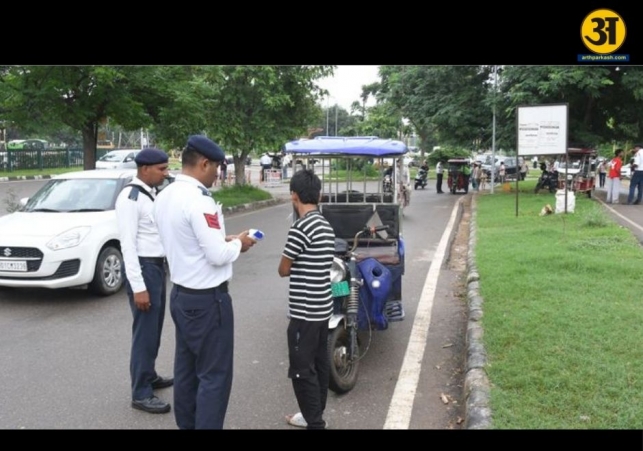
Member of Parliament Manish Tewari has called for a full investigation into how the Integrated Command and Control Centre (ICCC) in Chandigarh works. He raised concerns over a sharp rise in e-challans, saying it has led to public harassment and embarrassment.
Tewari welcomed the decision by Director General of Police (DGP) Sagar Preet Hooda to stop traffic police from issuing manual challans, which are often given directly on the spot. This decision came just one day after the DGP ordered the halt. The MP said this move shows that his questions in Parliament are being taken seriously. Recently, he had asked the government about the number of traffic challans issued between 2019 and 2025.
Tewari said the ICCC, which uses Artificial Intelligence (AI) to detect traffic violations, was a good idea in theory. It was set up to modernise traffic monitoring and make the process more efficient. However, he pointed out that the number of e-challans had risen very fast between 2022 and 2025. According to him, this has made people feel harassed rather than protected. Many citizens have said that they feel humiliated by receiving repeated challans, often without any clear explanation or warning.
The MP said it is important to find out whether the system is working fairly. He asked the authorities to carefully look into how the ICCC operates. He believes that some of the issues may be due to how the AI software is being used or how the data is being collected and processed. Tewari feels that no one should be punished unfairly just because a machine detected something wrong.
He added that traffic rules should be enforced, but there should also be a human touch to understand each situation. Sometimes, people make mistakes unknowingly. In such cases, a warning might work better than a fine. Overuse of challans, especially those issued by automated cameras, has left many citizens frustrated. The situation is even worse when people do not even realise that they have broken any rule.
Tewari appreciated the Chandigarh Police’s decision to now allow manual challans only for clear and visible violations. This means traffic police will not be able to stop someone unless they have clearly seen a rule being broken. He said this was an important step to reduce harassment on the roads.
However, he made it clear that more needs to be done to ensure that the traffic enforcement system is both fair and transparent. He stressed that every citizen should have the right to know why they were fined and should have an easy way to challenge the fine if they believe it was wrongly issued.
Congress leaders support traffic reforms and raise other public issues
Along with Tewari’s appeal, local Congress leaders also supported the recent changes in traffic management. Chandigarh Congress president HS Lucky met with DGP Sagar Preet Hooda on Wednesday. During the meeting, Lucky said he was happy to see the city making efforts to improve its traffic challan system. He said that making the system more citizen-friendly was a positive step.
Lucky told the police chief that many people had been upset with the previous system because they felt they were being unfairly targeted. He said that the public wants a traffic system that is not only strict but also understanding. People should not feel that they are being treated like criminals just for making small mistakes.
Apart from traffic issues, the Congress leader also raised several other important topics. He talked about the growing problem of drug abuse in the city. He said that this issue needs to be addressed urgently as it affects the youth and puts the future of the city at risk.
ALSO READ: Modern parenting trend 'FAFO' sparks debate among experts and parents alike
ALSO READ: The danger of World War 3 is growing — leaders must choose peace
Women’s safety was another major point discussed in the meeting. Lucky said that many women still feel unsafe while walking on the streets or waiting for public transport. He urged the police to make the city safer for women by increasing patrolling and setting up more help centres.
Community policing was also discussed. This is a system where local residents work closely with police to keep their areas safe. Lucky said that this approach builds trust and ensures better law and order. He asked the DGP to involve more people in community policing activities.
The Congress leader also highlighted the need for more police visibility in public areas. He said that when police officers are present on roads, parks, and marketplaces, it automatically makes people feel safer. It also helps prevent crimes before they happen. He suggested that the police force should be more active and visible during both day and night.
The meeting ended on a positive note, with both sides agreeing that public trust is important in all policing matters. Lucky said he hoped the city would continue to work toward a system where rules are followed but citizens are also treated with respect and fairness.
In conclusion, while traffic enforcement is important, there is a growing call for it to be done with more empathy and care. Technology like the ICCC can help, but it should not become a tool for blind punishment. With leaders like Tewari and Lucky raising their voices, the focus is now on making sure the system works not just efficiently, but also justly.
Related News
.jpg)